Leading Sega from the 1960s into the 1990s, Rosen—who died on Christmas Day—was a hugely important figure in the history of arcade and home gaming.
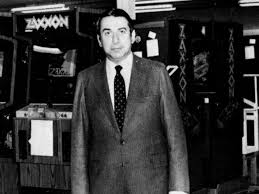
Few figures have shaped the arcade game industry as profoundly as David Rosen, who has died at the age of 95. A co-founder of Sega and a company director until 1996, Rosen played a central role in the emergence and growth of Japan’s video game industry. During the 1980s and 1990s, he also oversaw the creation of Sega of America and guided the company through the global success of the Mega Drive console.
Rosen’s journey began during the Korean War, when he served as a US Air Force pilot stationed in Japan. After the conflict ended, he chose to remain in the country, drawn by its culture and the opportunities he saw in its postwar economic recovery. In 1954, he founded Rosen Enterprises and identified a growing need for identification photos as Japan’s civilian population expanded its use of ID cards. To meet this demand, he began importing photo booths from the United States. His business soon widened to include pinball machines and other coin-operated amusements, which he supplied to shops, restaurants, and cinemas. In 1965, Rosen merged his company with fellow importer Nihon Goraku Bussan; its coin-operated division, Service Games, was abbreviated to form the name Sega.
Over the following 15 years, Sega became a driving force in arcade innovation. The company transitioned from importing machines to developing its own games, evolving beyond jukeboxes and pinball tables to electromechanical arcade titles such as the submarine shooting game Periscope and 1972’s Killer Shark, which briefly appeared in Jaws. Sega also began operating its own arcades, giving the company direct control over every aspect of its operations.
One of Rosen’s greatest strengths was his ability to identify and recruit people with an intuitive sense of the industry’s future. In 1979, he recognised the potential of rising arcade executive Hayao Nakayama, then head of Esco Trading, another arcade operator. As Rosen recalled in a 2013 interview, Nakayama stood out as an energetic distributor who was quick to respond to changes in the market. Keen to bring him on board, Rosen arranged the acquisition of Esco Trading, allowing Nakayama and his team to be absorbed into Sega. Nakayama would later serve as president of Sega Japan during the company’s golden era from 1983 to 1998.
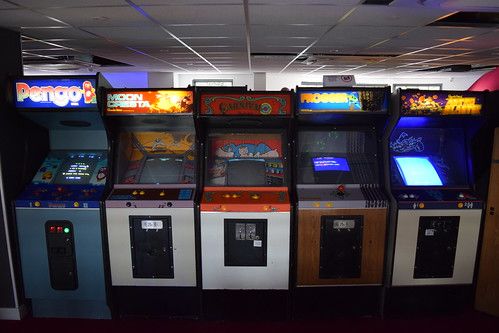
During this period, Sega evolved from being one competitor among arcade manufacturers such as Namco, Capcom, Taito and Konami into an industry leader. Its sleek, stylish arcade machines of the 1980s—OutRun, Space Harrier and After Burner—helped transform arcades from niche, nerdy spaces into fashionable, aspirational destinations. In the 1990s, titles like Virtua Racing and Virtua Fighter further cemented Sega’s reputation as a technological trailblazer.
From the late 1970s, Rosen also turned his attention to the emerging home console market. There, Sega faced a formidable rival in Nintendo, which dominated with its Color TV-Game system and later the Nintendo Entertainment System. When Rosen returned to the United States in the early 1980s, he set his sights on challenging his Kyoto-based competitor for a share of the global console business. “Nintendo was responsible for reviving the home console market after the Atari crash of 1983,” he later recalled. “We wanted to see whether we could build something competitive. Unfortunately, our first attempt didn’t measure up—it relied on off-the-shelf components. It wasn’t until 1986 that we released the Master System…”
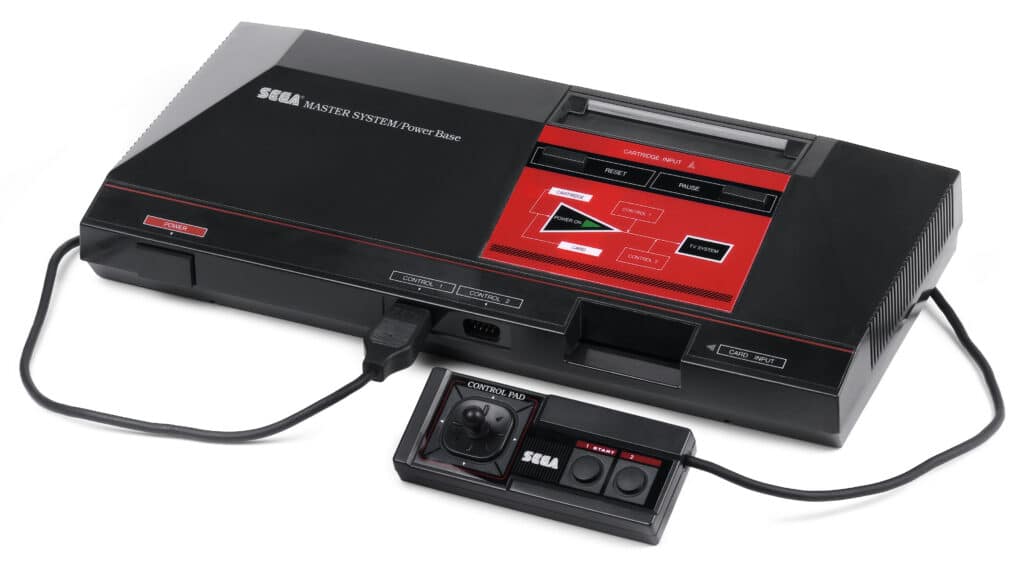
The system struggled to gain traction in the United States but proved hugely successful in Europe and South America, where Rosen identified a clear opportunity. While Nintendo positioned itself around family-friendly entertainment, the Master System found its strongest audience among teenagers, drawn to action-heavy titles such as Golden Axe and Shinobi. When Sega prepared to launch its next console in Japan in 1988 as the Mega Drive, Rosen pushed for a different name in the US market, rebranding it as the Genesis to signal a fresh start and a more mature identity. He also recruited Michael Katz, an experienced executive from Mattel and early console pioneer Coleco.
“We were under enormous time pressure,” Rosen later recalled. “I already knew Michael from some of the other projects he had been involved in. He brought valuable experience from Coleco and understood the industry players. I believed he could help launch the product while also putting proper structure in place, which he did.” Guided by Rosen’s vision, Katz positioned the Genesis as a console for teenagers rather than children, rolling out television advertising that paired video game footage with rapid-fire imagery, rock music, and the now-iconic slogan: Genesis does what Nintendon’t. When Tom Kalinske became CEO of Sega of America in 1990, he continued this aggressive marketing approach with a new wave of equally memorable commercials, often ending with someone shouting, “Sega!”
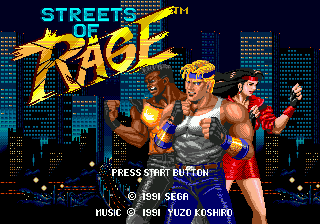
Rosen would stay active in the company in various senior roles until retiring in 1996. Although Sega’s home console business would falter in this period due to the rise of the Sony PlayStation, the company’s arcade supremacy remained for the rest of the decade. I spoke to him in 2013 while writing the book Sega Mega Drive Collected Works. As a lifelong Sega fan, my hour-long chat with him that day was a career highlight. He talked fondly about his time in Japan, the people he worked with and his journey through the industry. He told me with considerable glee that while out and about in his home town of Los Angeles, strangers would still shout ‘Sega!” at him when passing on the street.