

A full computer and a suite of sensors packed into a single 2×4 Lego brick
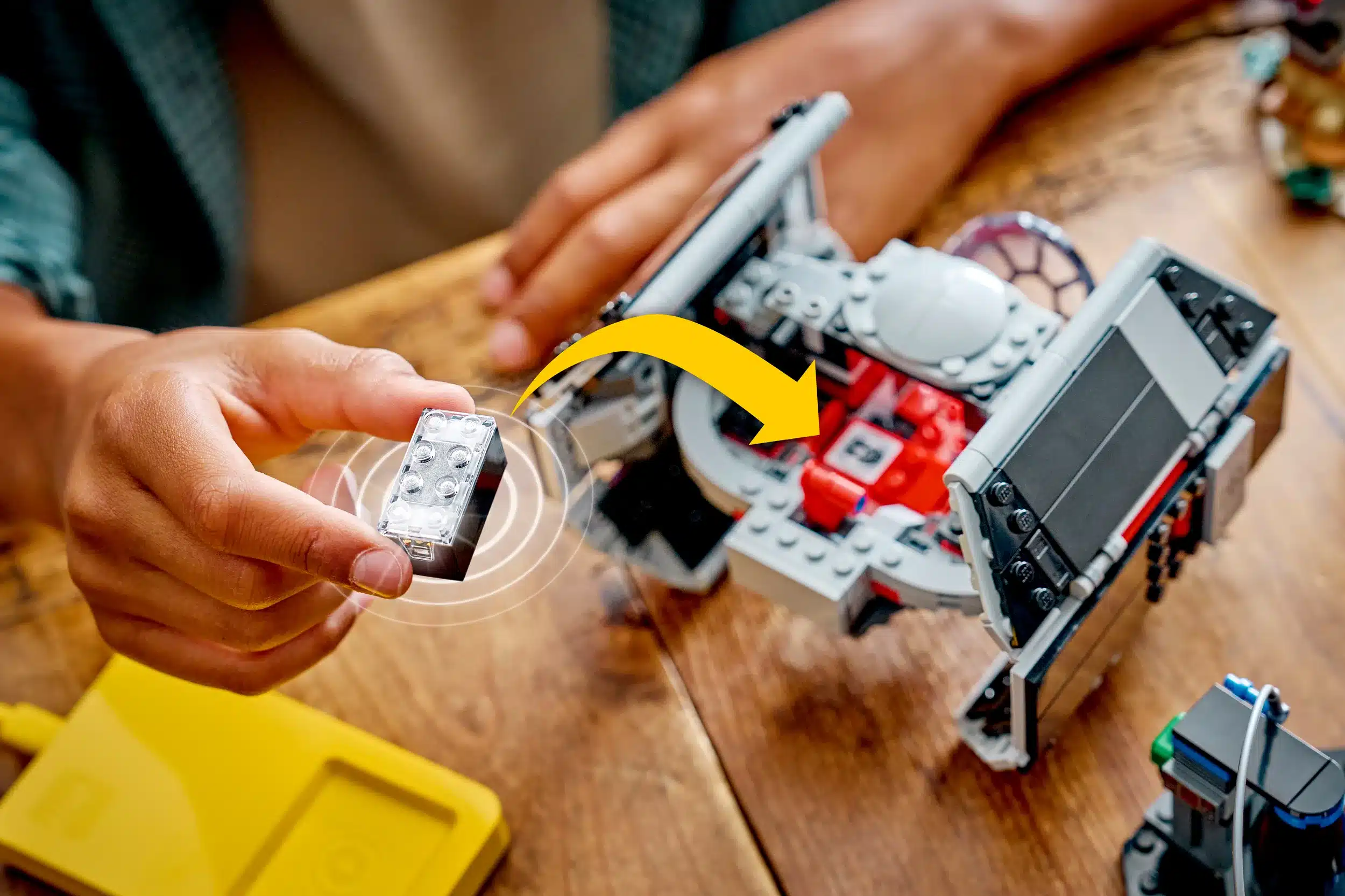
On March 1, 2026, The Lego Group will launch its most ambitious brick yet: a tiny computer that fits entirely inside a classic 2×4 Lego brick. When it detects NFC-enabled smart tags embedded in new Lego tiles or minifigures—or when it senses other Smart Bricks—the company says it will bring entire Lego sets to life, from humming lightsabers and roaring engines to light-up blasters and the music of Lego Star Wars.
Announced at CES 2026, these “Smart Bricks” and the broader “Smart Play” initiative are a major step beyond the larger Lego Mario toys, which relied on two AAA batteries and activated only when their bottom-mounted cameras detected colors or barcodes. The new bricks are wirelessly charged via a pad that can power multiple units at once, and the battery is designed to retain performance even after years of inactivity.
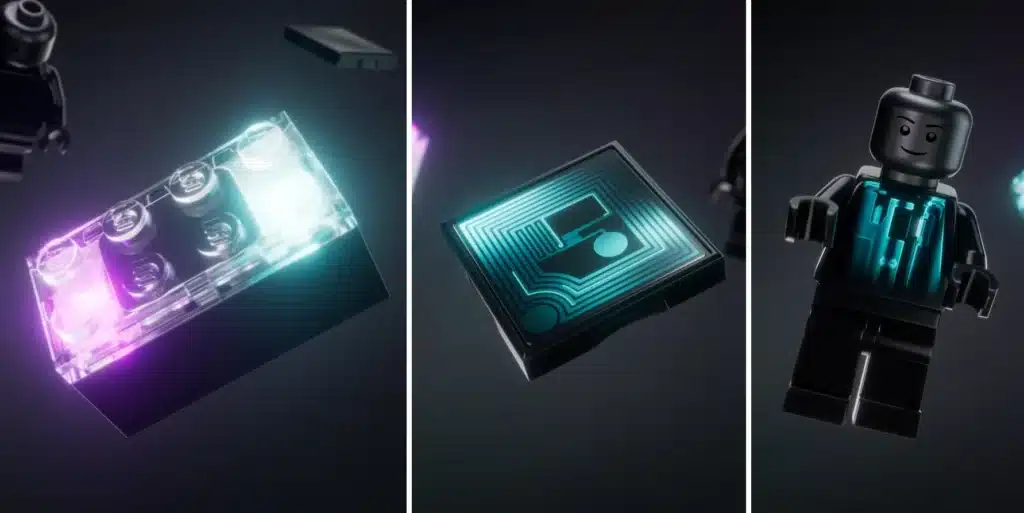
Image Lego
The Smart Bricks feature lights and sound, light sensors, and inertial sensors that detect movement, tilt, and gestures. They also form a Bluetooth mesh network, allowing them to track each other’s position and orientation. This means Lego Star Wars ships and figures can interact in battles, or The Imperial March can play when Emperor Palpatine is placed on his throne. Built into Lego vehicles, the bricks can detect which car crosses the finish line first or switch from engine sounds to crash effects if the vehicle flips over. At the heart of each brick is a custom ASIC smaller than a single Lego stud, with firmware that can be updated through a smartphone app.
The bricks also include a microphone, which Lego Group spokesperson Jessica Benson explains functions as a “virtual button” rather than recording sound. “You can blow on it, for example, like on a birthday cake, and it triggers actions,” Benson says. “It’s simply another sensor, picking up sound inputs and reacting in real time to what kids are doing. It’s not recording any personal information.”
Benson also confirmed that the bricks contain no AI and no camera. Without a camera to scan barcodes, they are not compatible with Lego Mario tiles.
The first sets, shipping on March 1, 2026, will all be Lego Star Wars:
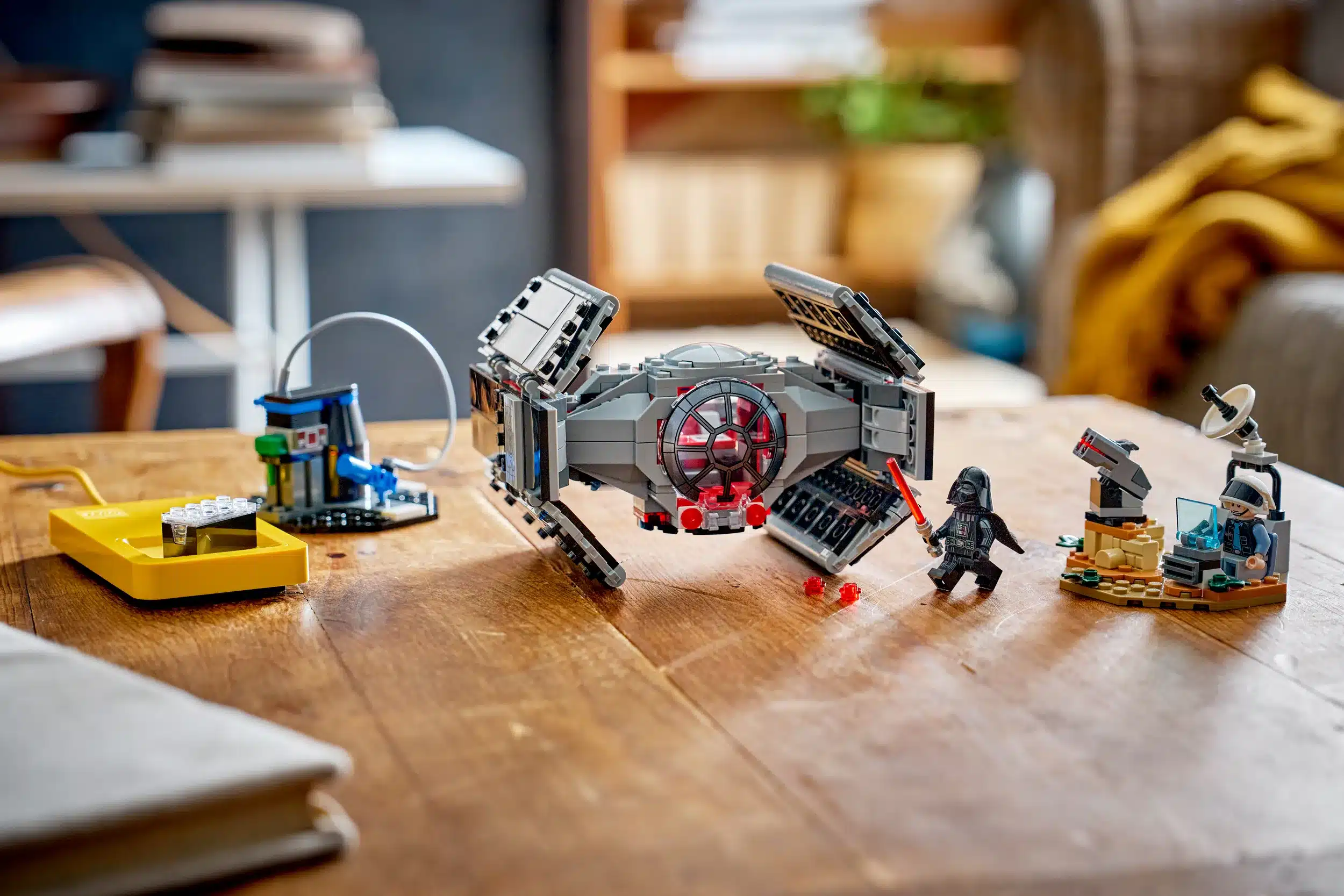
- Darth Vader’s TIE Fighter – $70, 473 pieces, including one Smart Brick, one TIE Fighter tag, and one Darth Vader figure.
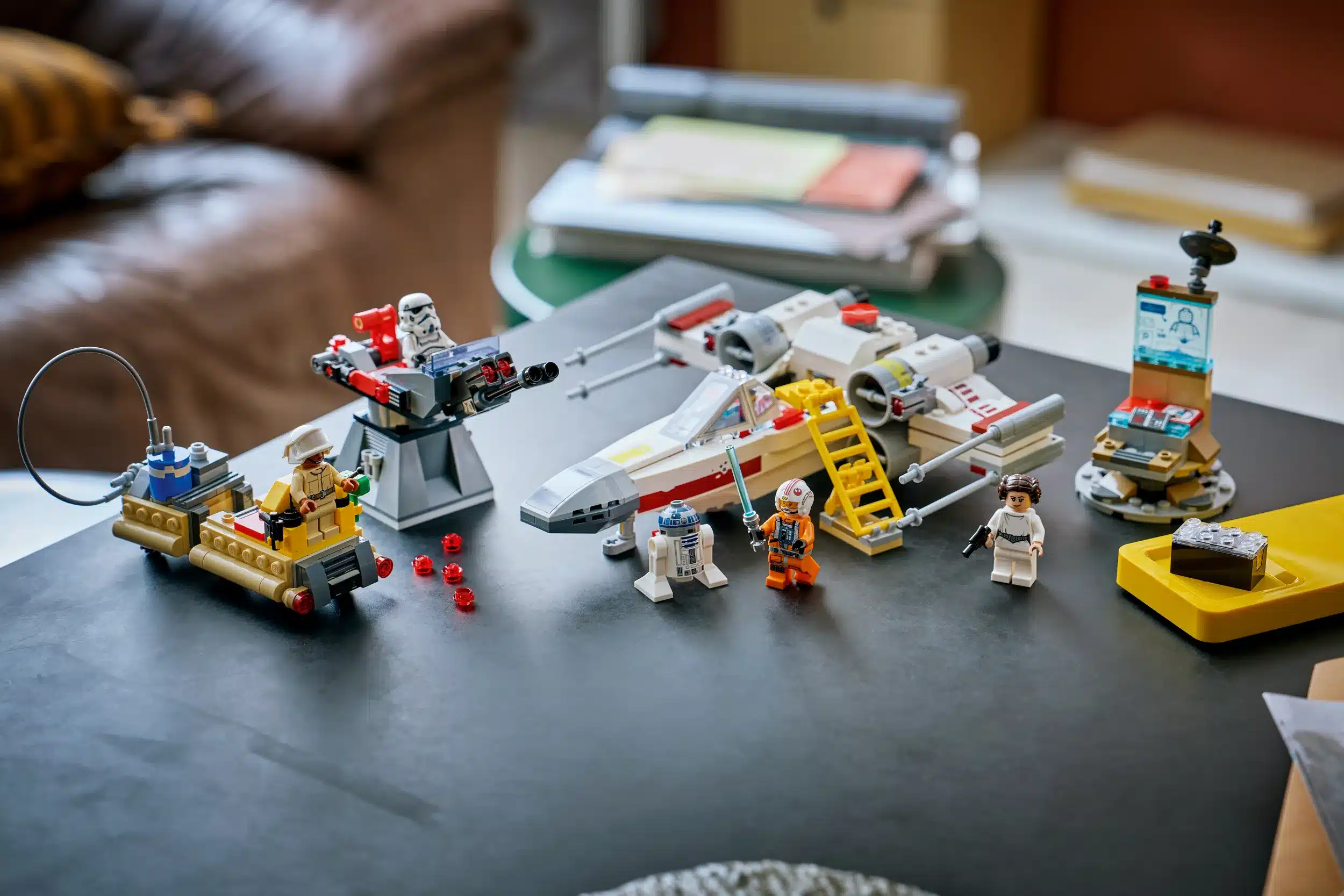
- Luke’s Red Five X-Wing – $100, 584 pieces, including one Smart Brick, five tags (X-Wing, Imperial turret, transporter, command center, R2-D2 accessories), and both Luke and Leia figures.
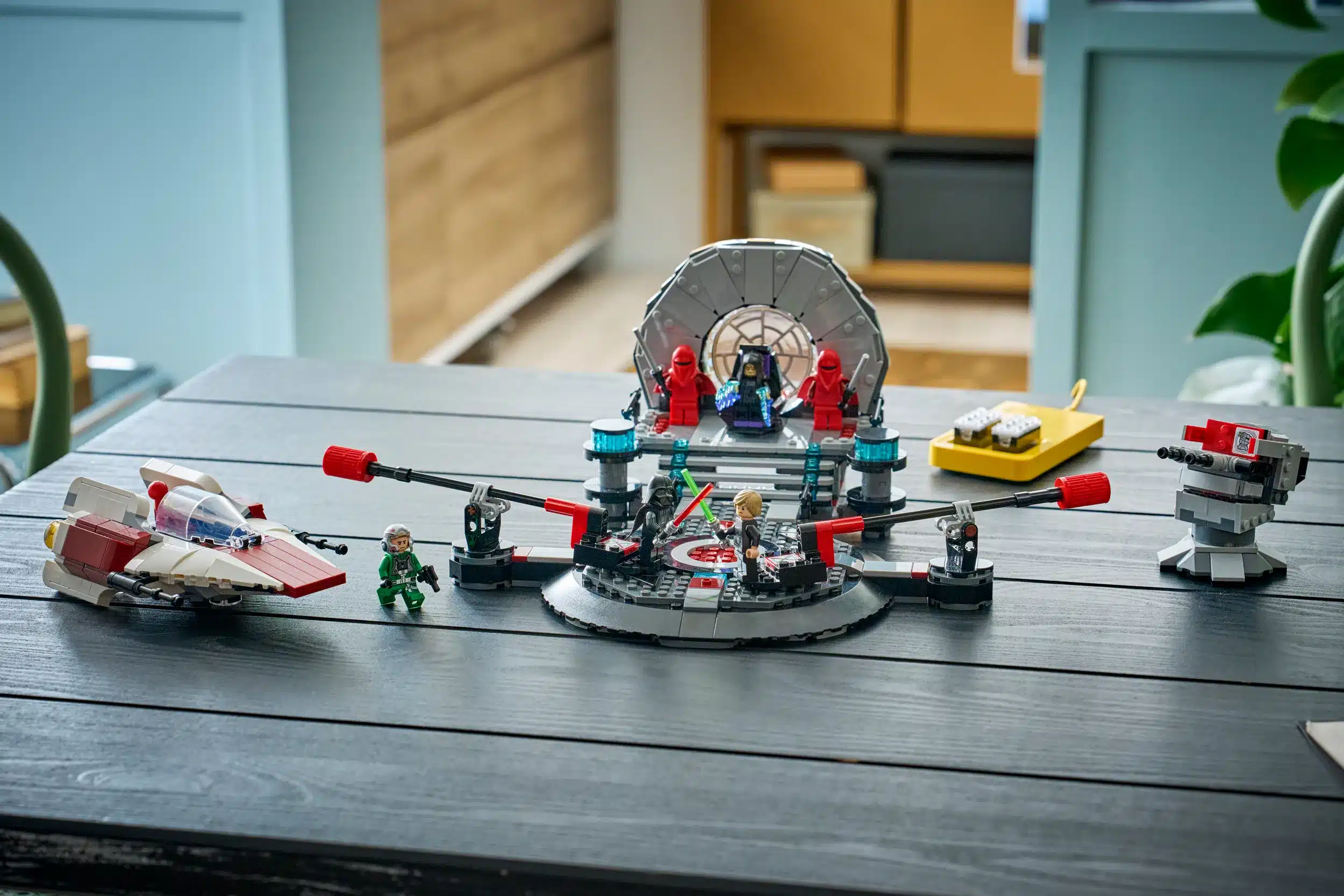
- Darth Vader’s Throne Room Duel & A-Wing – $160, 962 pieces, including two Smart Bricks, three figures (Luke, Emperor Palpatine, Darth Vader), and five tags (A-Wing, throne, Death Star turret, and two lightsabers).
The sets are noticeably smaller than traditional minifigure-scale Lego Star Wars ships, measuring about 4 × 4 × 5.5 inches (10 × 11 × 15 cm) for the TIE Fighter and 2 × 8.5 × 7.5 inches (6 × 22 × 19 cm) for the X-Wing, including small outpost buildings. As expected, the inclusion of Smart Bricks contributes to the higher price point.

The 473 piece Darth Vaders TIE Fighter set comes with one smart brick one smart tag and one smart minifigure Image Lego The TIE Fighter will be the cheapest of the three new Lego smart brick sets at $70 Image Lego The 584 piece Lukes Red Five X Wing set includes one smart brick five smart tags and two smart minifigures Image Lego When available starting on March 1st it will be $100 Image Lego The 962 piece Darth Vaders Throne Room Duel A Wing set includes two smart bricks three smart minifigures and five smart tags Image Lego The most expensive of the three new Star Wars sets at $160 Image Lego
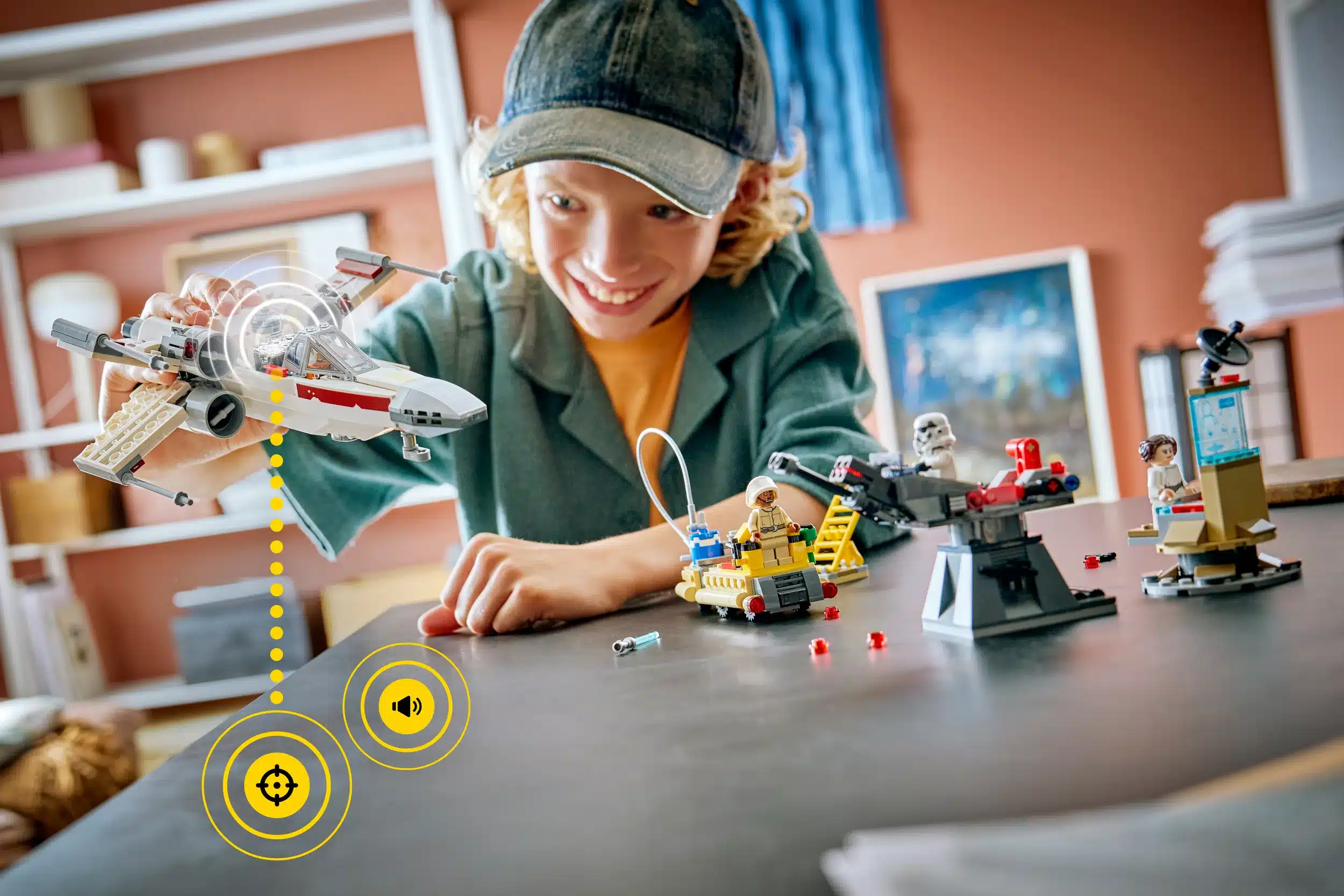
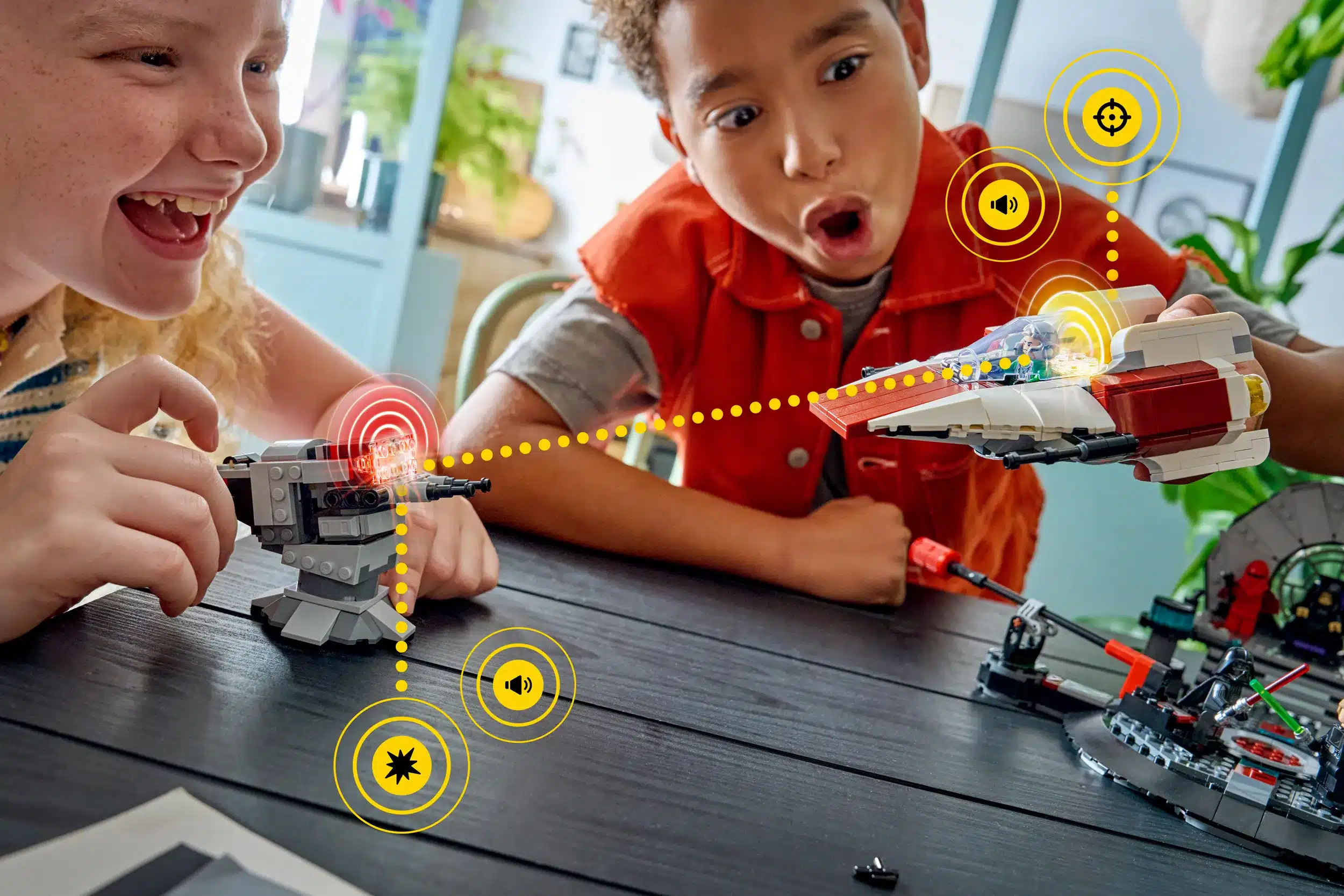
If the Smart Bricks simply replaced the imaginative sounds and effects kids can already make themselves, that would be one thing — but the technology here opens up new possibilities. Lego spokesperson Jack Rankin notes that the smart tags can encourage creative, mix-and-match play: in early testing, a tag that quacked like a duck combined with a helicopter set created a “duck helicopter” that kids enjoyed.
It’s unlikely Lego will limit the bricks to just a few Star Wars sets. The company describes them as “the most significant evolution in the Lego System-in-Play since the introduction of the Lego Minifigure in 1978,” and unconfirmed reports suggest that upcoming Lego Pokémon sets may be next. The bricks were quietly piloted in 2024 in a Lego City set as well.
“Lego Smart Play will continue to expand through new updates, launches, and technology,” the company says.
While this isn’t quite the computer brick we originally requested from Lego, we’re excited to try them out this week at CES.